
Drill Breakdown - Inviting & Manipulating Tight Coverage
Put Your Defender on Skates - Drill Breakdown #2

Today, we’ve got a drill breakdown video from this past Tuesday’s Elite Session. Throughout the session, we focused on utilizing our edgework to improve our deception when retrieving a puck from the boards.
One of the concepts I stressed as we moved from our Concept & Application phase to our Structured Trials phase (remember: every TPHS lesson is designed to help players build a skill C.A.S.T.L.E) was the importance of bringing the defender tight to your hip - sometimes called a hip seal.
When we create a hip seal, it does a variety of things. First, it limits the defender’s ability to establish an angle - one of the fundamental aspects of proper defensive play. Second, it oftentimes hides the puck from the defender’s line of sight, making it harder for them to anticipate what move is coming. Lastly, by pressing back into a defender, the attacking player preserves valuable time and space along the boards.
Video
Image 1
Shoulder checking is an essential habit for all players. Taking in information prior to puck retrievals makes for more effective decision-making. We can also see here that Loghan isn’t biasing any particular direction with his skates.
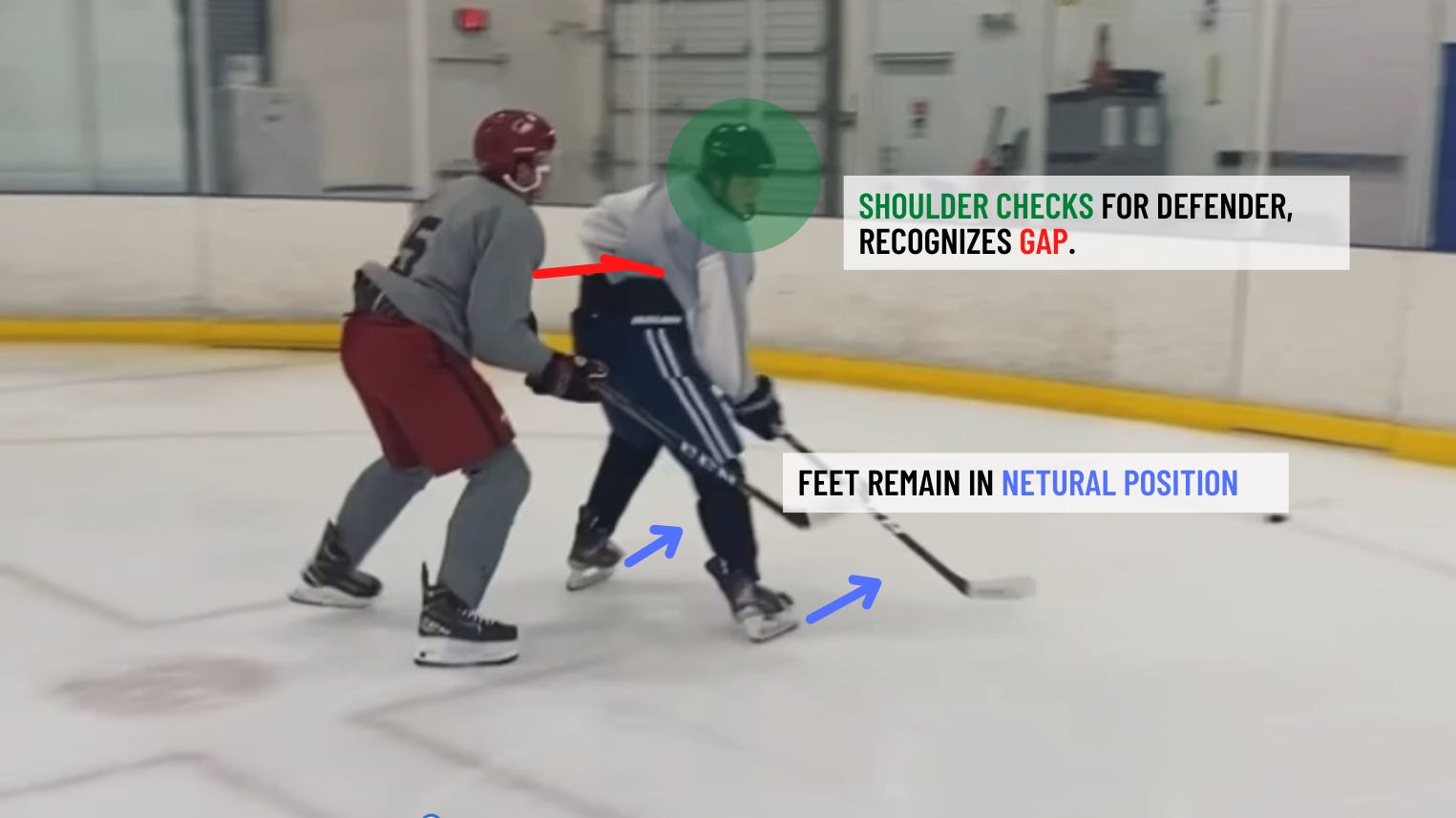
Image 2
Selling your fakes effectively is a whole-body job. Imagine what it takes for someone to fake you out? Side note - check out how far from the puck this initial fake takes place. This separation from the puck and the boards allows for the maximum preservation of time and space. We can also take a look at Loghan’s utilization of a Punch Stop, which allows him to turn quickly and set his outside edge.
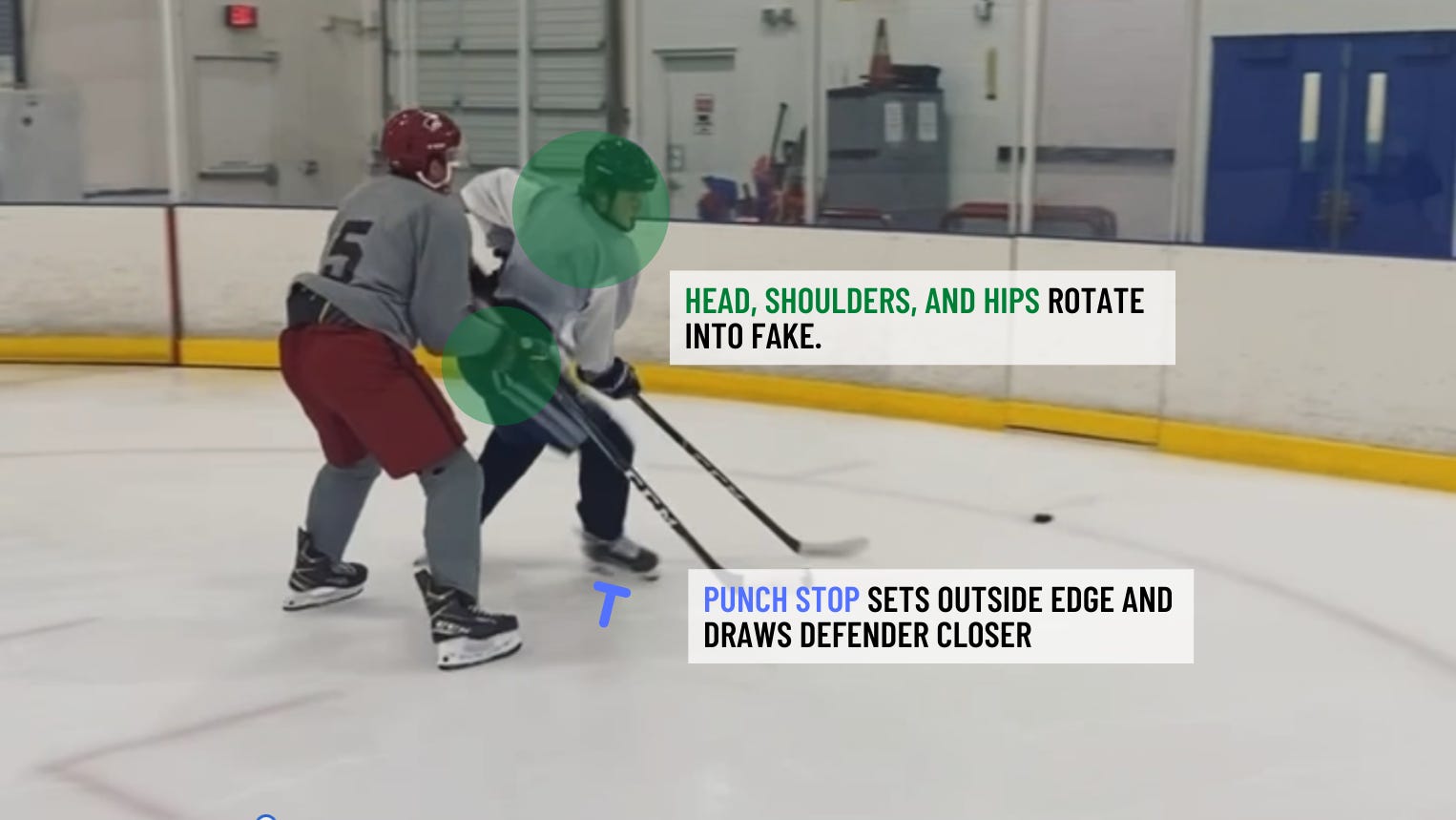
Image 3
With the fake and punch stop performed correctly, our defender has now engaged in tight coverage. With the distance preserved along the boards, Loghan can maintain momentum as he quickly changes directions. We can see the other foot now performing a Punch Stop to quickly change directions and load up the first crossover out of his turn.
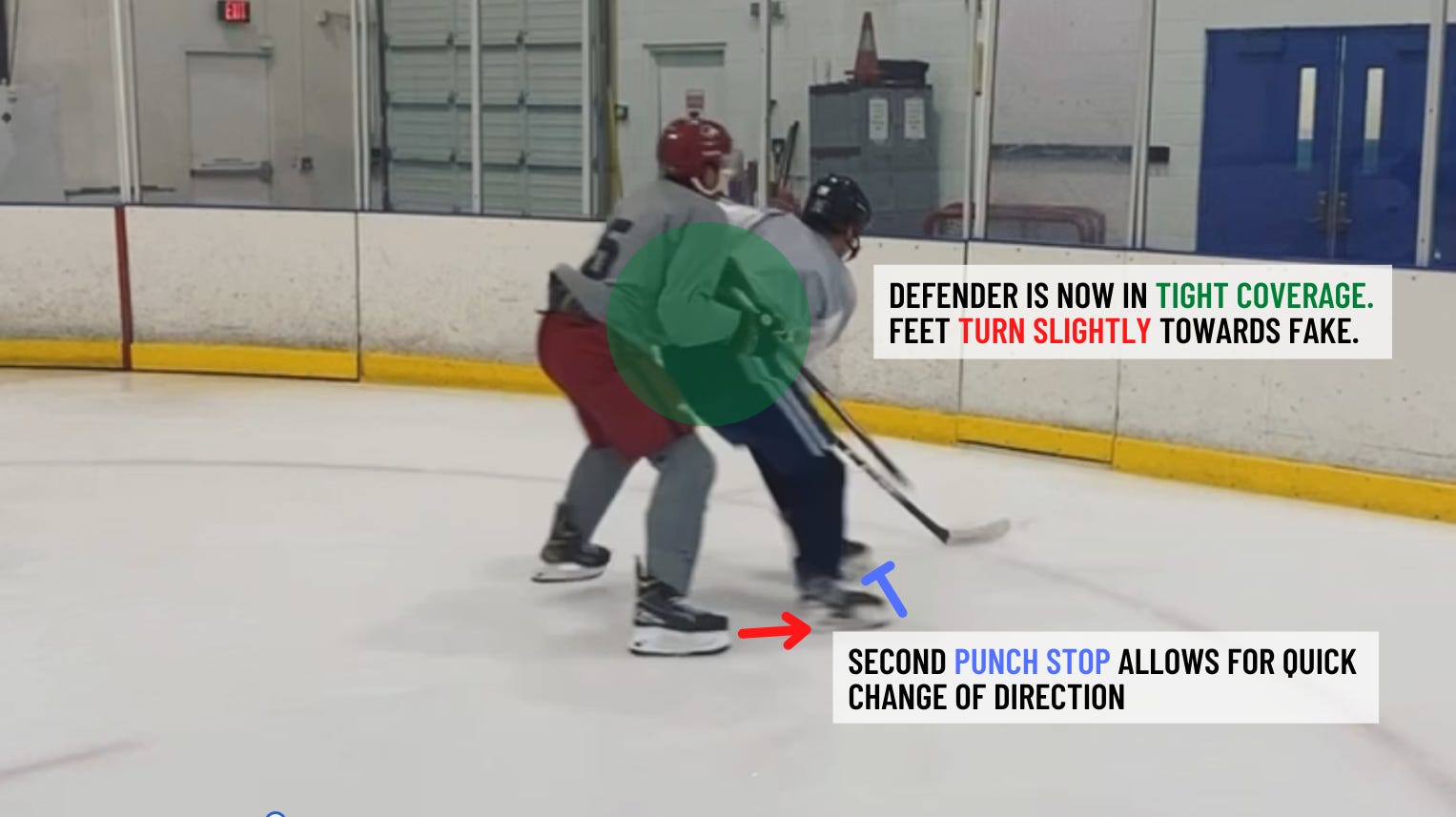
Image 4
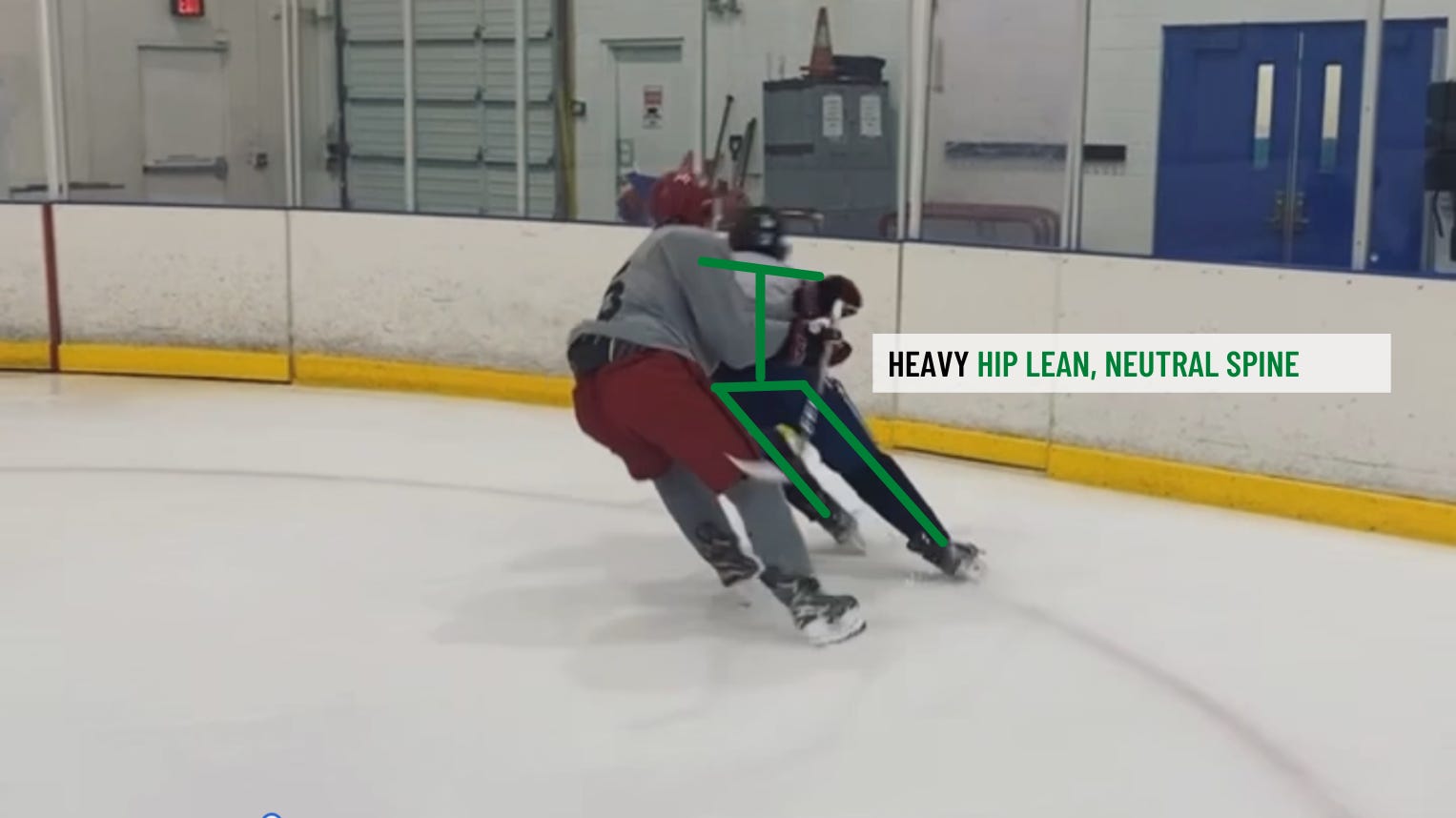
As with all turns, we want the lower body to represent the majority of the lean, while the spine remains in a neutral position. This allows for better weight distribution on the blades, as well as a more stable center-of-gravity.
I hope you guys have enjoyed this breakdown and found some tips to try on your own game.
Let’s Talk Shop!
There was great feedback from our first Q+A post. Keep those questions coming! Feel free to write them down in the comments or send them to me directly at tpeters@taylorpetershockeyschool.com
See you then!
Coach Taylor
Another great video! Thanks Coach!
What are some drills to help we win battles against the boards?